Kalamandu2 min read
What oxidized actually means
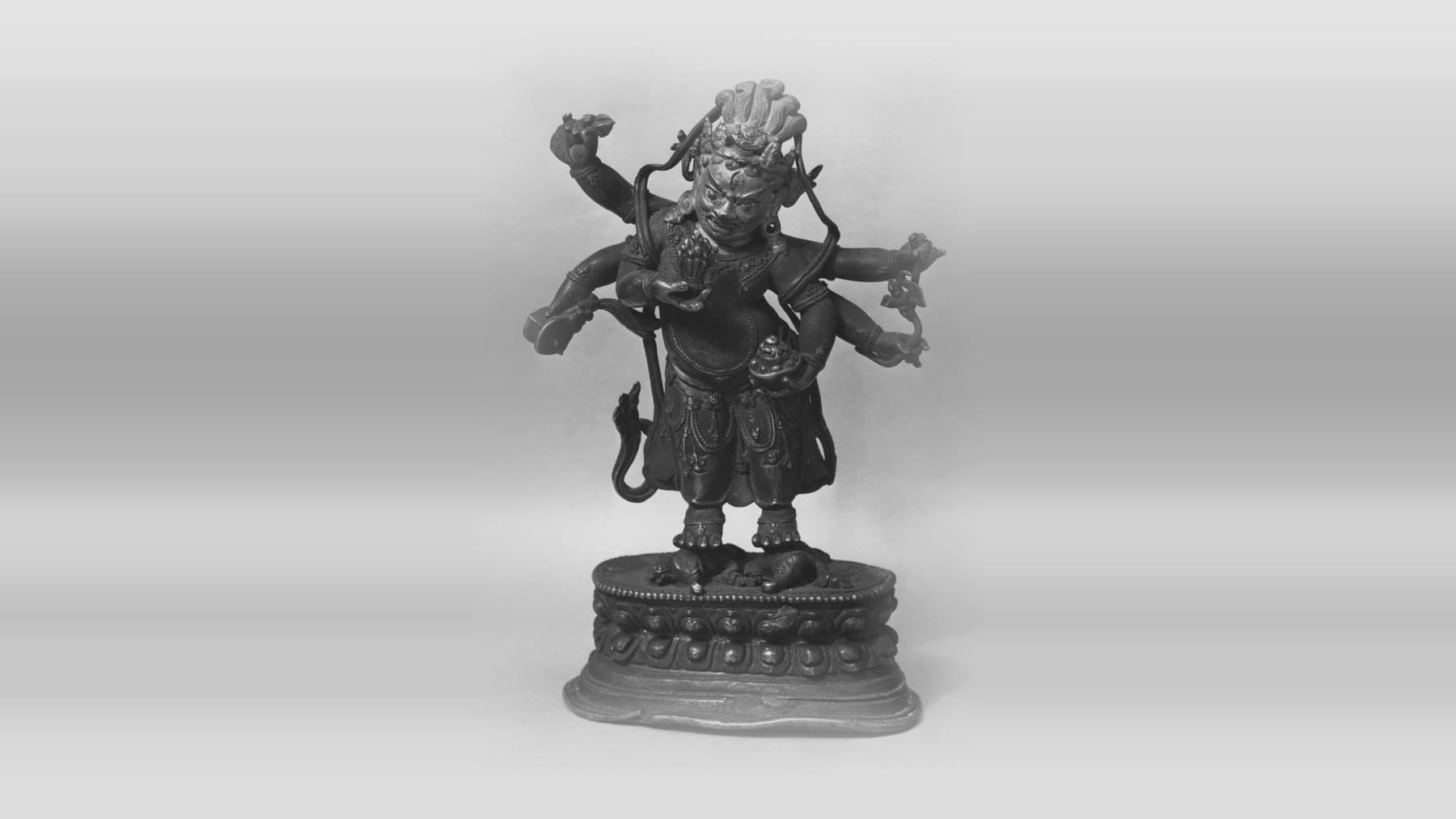
The dark finish is not an absence of gold. It is a deliberate surface, and it is the one that shows the chasing best.
Half of this catalogue is described as oxidized, and the word is doing more work than it
looks like it is.
It is a surface, not a shortcut
Copper left alone goes brown and then green, unevenly, over years. An oxidized finish is
that reaction brought on deliberately and then stopped: the surface is darkened, the
raised areas are cut back with a burnisher so bare metal shows on the edges, and the whole
piece is sealed.
What you get is a dark figure with bright highlights exactly where light would catch it.
It is not a piece that failed to be gilded. It is a different decision about what the
metal should look like.
Why it shows the work
Gold reflects. On a fire-gilt figure the highlights are everywhere and the eye reads the
shine before it reads the shape — which is part of the point, because a gilt figure is
meant to be radiant.
An oxidized figure has almost no reflection to hide behind. Every line the artisan cut
into the face reads as a line, dark in the recess and bright on the edge. If you want to
judge how well a piece was chased, judge an oxidized one.
How it ages
Slowly, and in the direction it is already going. Handling wears the highlights brighter
and the dark stays dark, so most pieces look better after a few years — which is not
something anybody says about worn plating.
Do not put metal polish on one. It takes the darkening off in a stroke and leaves a bright
copper figure that cannot easily be put back. A dry cloth is the whole maintenance
routine.
The other dark finishes
Antique brass is a warmer, yellower version of the same idea on a brass alloy rather
than copper. Partial gilt leaves the body oxidized and gilds the robe or the ornament,
which is the traditional treatment for several figures and the reason some pieces read as
two-tone.