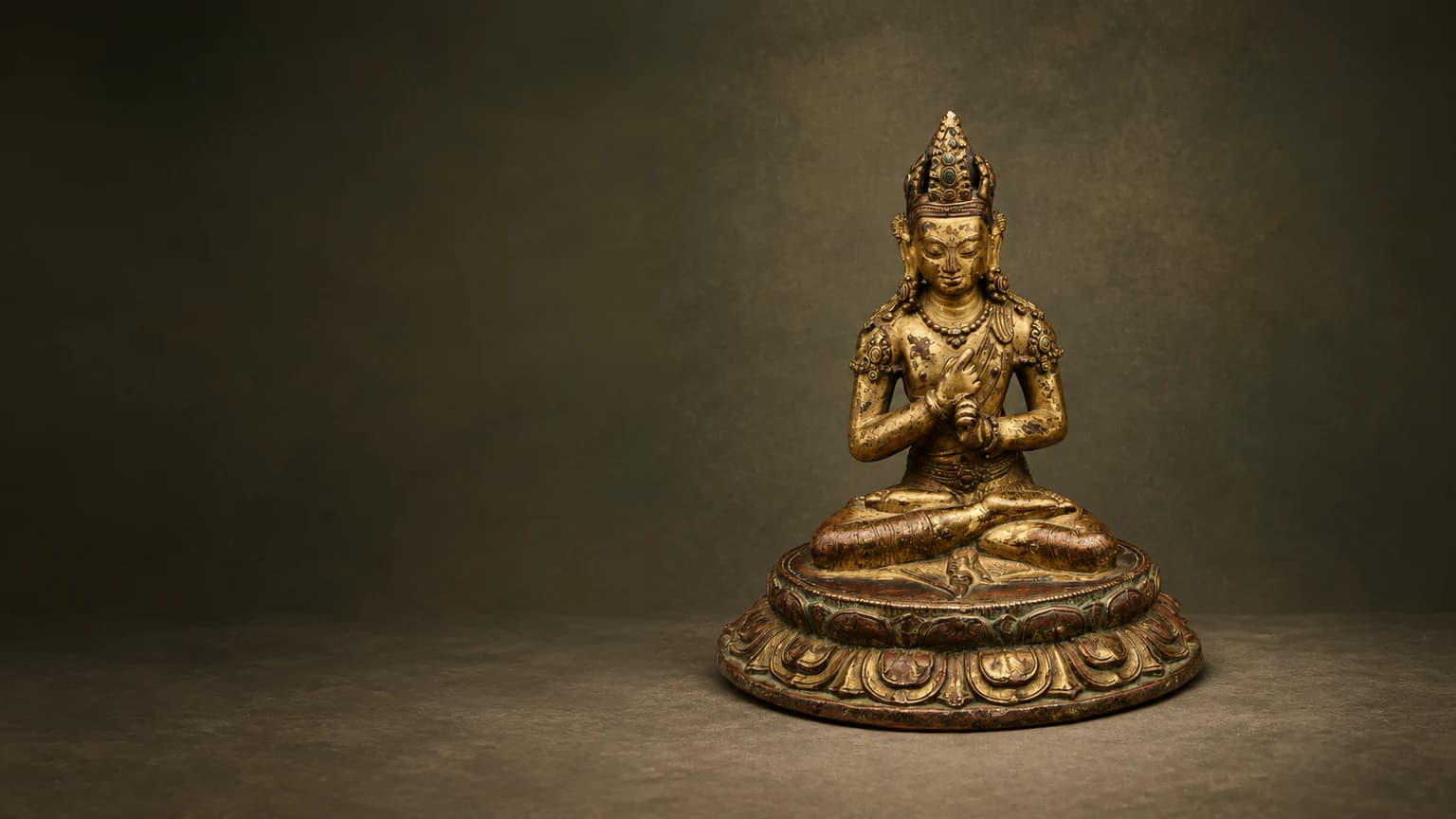
Hand-cast Buddhist statues from Nepal

Featured

Oku Bahal, Patan

The mould is broken to get the statue out

Which is why no two are alike. Lost-wax casting, worked in the same lanes of the Kathmandu valley for a thousand years.

Fire-gilt, 24k

Gold that was never plated on

Mercury gilding bonds pure gold to copper in a single firing. It is done by a handful of families, and it lasts generations.

One of one

Masterpiece commissions

Eleven months, three artisans, signed underneath. When it sells, there is not another.

Under NPR 65,000

Small pieces, same workshop

Shrine-sized castings from the artisans who make the large ones.

Just arrived

New from the workshops

Most wanted

What people are buying

Lost-wax casting

How a statue is made

Six stages, in the order they happen. One of them destroys the mould, which is why this catalogue has no two of anything.

Akshobhya, the Transcendent Buddha of the East — Nepal (Kathmandu Valley), 12th century. Museum reference image standing in for Thousand-Armed Chenrezig.
Thousand-Armed Chenrezig — Shakya Atelier
  1. 01

    The wax model

    The figure is built up in beeswax over a clay core, full size and in full detail. Every proportion the finished piece will have is settled here, in a material that softens in a warm room.

  2. 02

    The mould

    Fine river clay is packed around the wax in thin layers and left to dry in the shade. Dried too quickly it cracks, and the model inside it is already gone.

  3. 03

    The firing

    The mould goes into the fire and the wax runs out of it, leaving a cavity the exact shape of the model — down to a fingernail.

  4. 04

    The pour

    Molten copper alloy is poured into the cavity and left to cool. What comes out is one piece, not parts joined together afterwards.

  5. 05

    The break

    The mould has to be broken to get the casting out. That is why no two pieces are identical, and why a repeat order is a different object rather than another copy of the same one.

  6. 06

    The chasing

    The face, the eyes, the fingers and the ornament are cut in by hand with punches — most of the labour on a small figure. On a fire-gilt piece, gold dissolved in mercury is then painted on and fired until only the gold is left.

What to expect

  • The maker is named

    Every piece is listed under the workshop that made it, and that workshop is paid directly.

    Meet the makers
  • One of a kind

    The mould is broken to release each casting, so no two are identical. The variation is the evidence, not a defect.

    See how
  • Cash on delivery

    Pay the courier when it arrives, or by wallet or bank transfer. Nothing is charged up front.

    How delivery works

Journal

From the workshop

  • 2 min read

    Which figure is which

    Most of the statues in this catalogue can be identified from across a room, once you know that the hands are doing the talking.

  • 2 min read

    What oxidized actually means

    The dark finish is not an absence of gold. It is a deliberate surface, and it is the one that shows the chasing best.