Kalamandu2 min read
Fire-gilding, and how to tell it from plating
Both look like gold on the day you buy. One of them is still gold in twenty years, and the wear pattern usually tells you which.
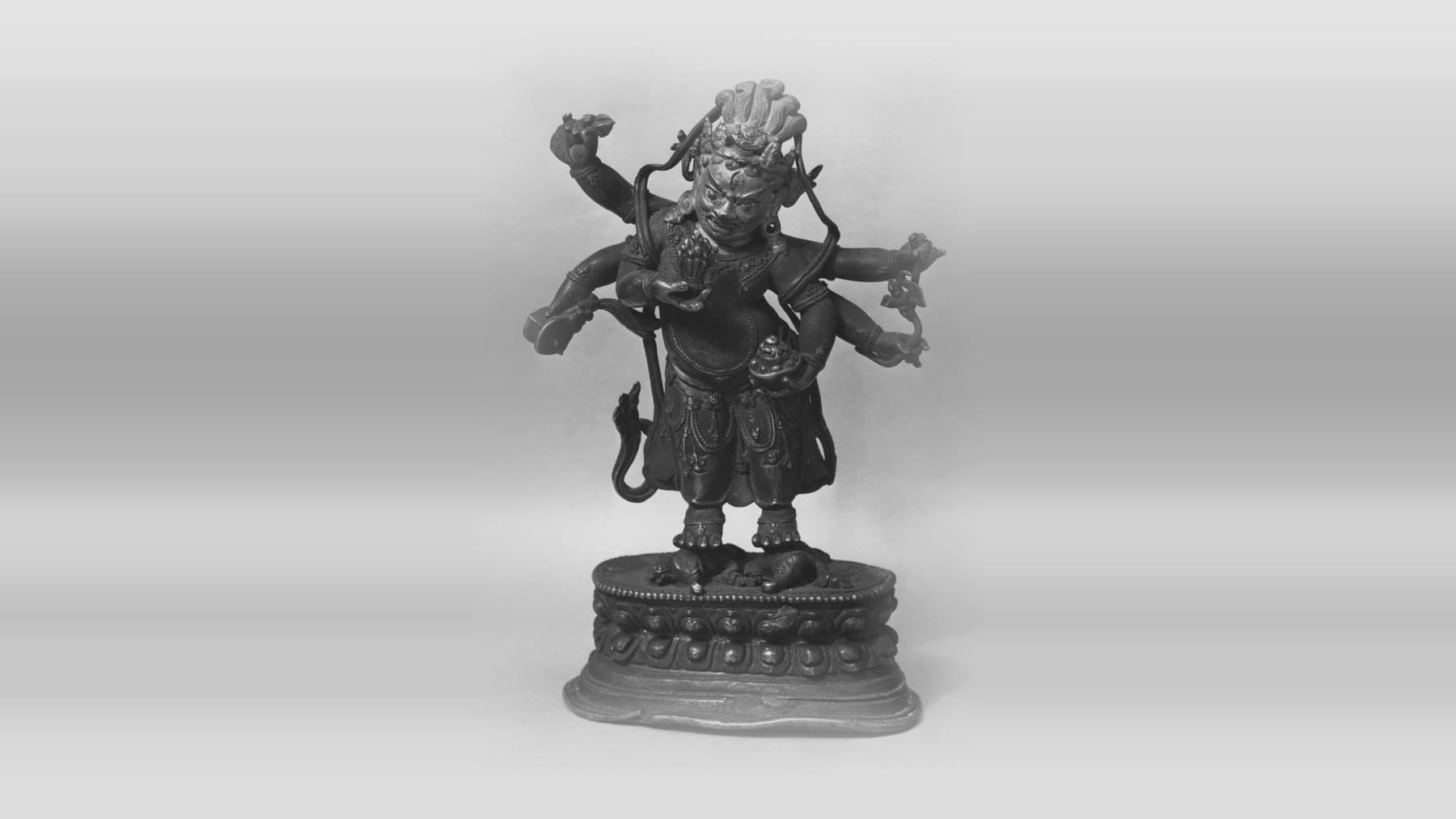
Two figures on a shelf, both gold, one four times the price of the other. The difference
is not how much gold is on them. It is how the gold got there.
Electroplating
The piece goes into a bath and a current pulls a film of gold onto it. The film is thin —
usually well under a micron — and it sits on the surface rather than in it. It is fast, it
is cheap, and on the day it comes out of the bath it looks like gold, because it is gold.
What it does not do is wear like gold. The film abrades wherever a hand touches it, which
on a devotional figure is the same three places every day: the crown, the knees, the front
of the base. Two or three years of that and the copper begins to show through in patches
with hard edges.
Fire-gilding
Gold is dissolved in mercury to make an amalgam, painted onto the copper as a paste, and
the piece is heated. The mercury drives off. The gold that is left has bonded into the
surface rather than sitting on it, and there is far more of it — thick enough to be worked
with a burnisher afterwards.
It is slow, it needs a furnace, and the mercury makes it genuinely dangerous. In the
Kathmandu valley it is done by a handful of families, and they do not do it to an
electroplating budget.
What to look at
The wear pattern. Gilding that has worn thin shades from gold to copper and goes soft
at the edges. Plating that has worn through has a hard boundary, like a sticker lifting.
The recesses. Fire-gilding is painted on, so it reaches into the folds of a robe and
behind the ornament. Plating follows the current, which prefers the high points, and the
deep cuts are often left dull.
The colour. Fired gold on copper has a warm, faintly red depth to it, because the
copper underneath is taking part. Plating over a nickel underlayer tends to read flat and
slightly green.
And what to ask
Ask which it is. A workshop that fire-gilds will say so without being pushed, because it
is most of the reason the piece costs what it costs. If nobody will answer the question,
that is the answer.