Kalamandu1 min read
What actually decides a statue's price
Not the weight and not the height. The answer is in the face, and in whether the gold was fired on or plated.
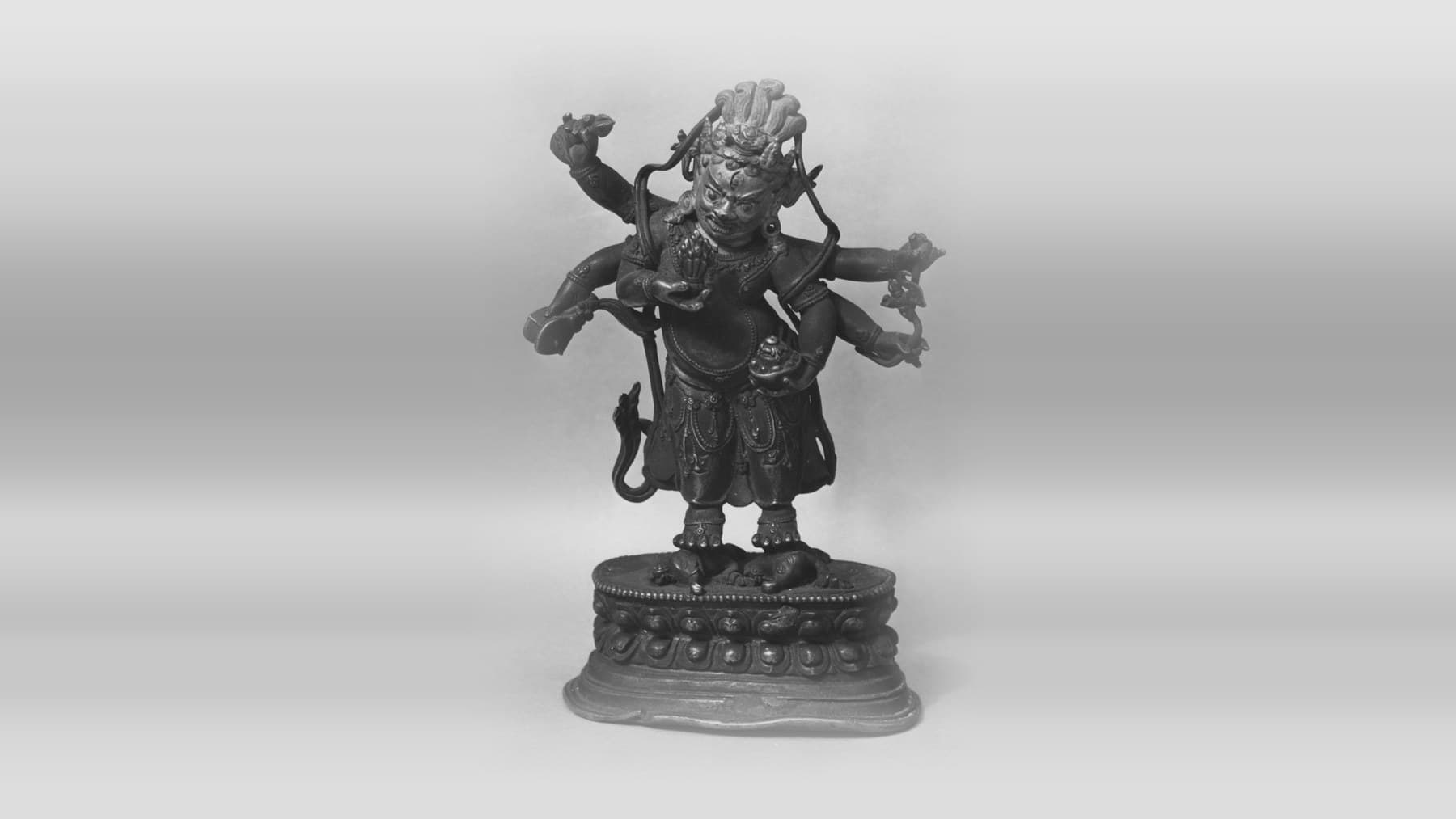
Ask what a statue is worth and you will usually be told its weight, its height, and
whether it is gilt. None of those is the thing that decides whether it is any good.
The face is where the money went
A casting comes out of the mould soft and approximate. Everything that makes it worth
looking at happens afterwards, with a punch and a chisel: the line of the eye, the edge of
the lip, the separation between the fingers. On a nine-inch figure that is most of the
labour, and it is done by one person who has spent years learning to place about four
strokes correctly.
This is why two statues of the same deity, the same size and the same metal can differ in
price by a factor of three, and why the cheaper one looks flat in a way that is hard to
name until you see them side by side.
What gilding actually is
Fire-gilding is not plating. Gold is dissolved in mercury, painted on, and the piece is
heated until the mercury drives off and leaves pure gold bonded to the copper. It is slow,
it is dangerous, and it is done by a handful of families in the valley. Electroplating
looks similar for about a year.
What to ask instead
Ask who cast it and where. Ask whether the face was chased or left as cast. Ask whether
the gilding was fired or plated. Those three answers tell you more than any measurement,
and a shop that cannot answer them is not close enough to the work.