Kalamandu2 min read
Which figure is which
Most of the statues in this catalogue can be identified from across a room, once you know that the hands are doing the talking.
Iconography in this tradition is not decoration, it is a naming system. What a figure
holds, what its hands are doing and how it is seated are the identifying marks — and they
are consistent enough that you can read most of them off a photograph.
Start with the hands
A seated figure with the right hand touching the ground is Shakyamuni: the
earth-touching gesture, the moment of enlightenment. The same figure with a begging bowl
in the lap is still Shakyamuni, at a different moment.
Two hands together in the lap holding a vase is Amitayus, the Buddha of long life. A
single hand raised palm-outwards is a gesture of reassurance that turns up on several
figures, so on its own it settles nothing.
Then what is in them
Medicine Buddha holds a myrobalan plant in the right hand and a bowl in the left.
Manjushri carries a sword raised over the shoulder and a book. The sword cuts through
ignorance; the book is what it is cutting towards.
Chenrezig — Avalokiteshvara — is the compassion figure and comes in several counts.
Four arms is the common one, with two hands pressed together at the chest. A thousand arms
and eleven heads is the elaborate version, and a workshop will spend most of a year on
one.
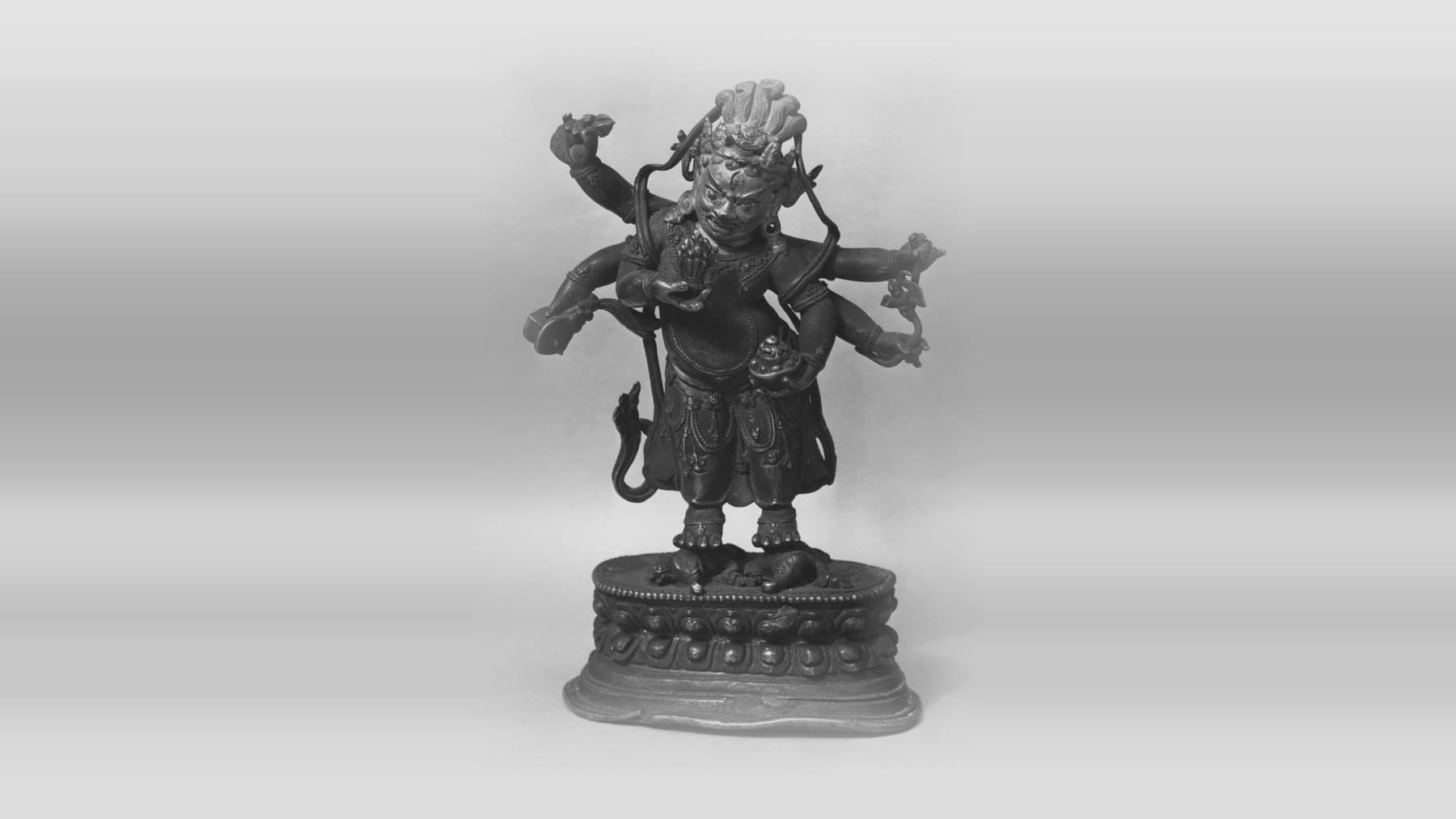
Vajrapani, Mahakala and Vajrakilaya are wrathful figures: heavy limbs, bared
teeth, usually standing on something. They are protectors, and the expression is the job.
Then how it sits
Full lotus, both legs folded in, is the standard meditative seat. One leg lowered as if
about to stand is Tara — Green Tara stepping down to act, White Tara normally fully
seated. Royal ease, with one knee raised, tends to mean a master rather than a Buddha:
Guru Rinpoche with a staff in the crook of the arm, Milarepa with a hand cupped at
the ear, Je Tsongkhapa in the pointed hat.
The exceptions
Workshops vary, regions vary, and a commissioned piece can combine attributes that no
manual lists. If the figure in front of you does not match anything here, the listing
names the deity — and the workshop that cast it can say why it looks the way it does.